If you live in the Indianapolis area, you already know the feeling: the calendar flips to late August, ragweed lets loose across central Indiana, and suddenly your eyes itch and your nose won't quit — even when you're sitting on your own couch with the doors shut. That last part is the frustrating one. You'd think coming inside would be relief. Often it isn't, because the pollen came in with you, and it's now living in your carpet, your bedding, and every soft surface in the house.
Cleaning won't cure an allergy, and it's no substitute for talking to your doctor about treatment. But reducing the allergen load inside your home — the amount of pollen, dust, and dander you're breathing during the hours you spend indoors — is one of the most practical things you can do to make the season easier. This guide covers what's actually triggering you at home, and how to clean in a way that cuts it down instead of stirring it back into the air.
Why the fight happens indoors
Americans spend the vast majority of their time inside, which means your home — not the trail or the yard — is where you get most of your allergen exposure. During ragweed season, pollen hitches a ride indoors on shoes, clothes, hair, bags, and pets, and it drifts in through open windows and doors. Once inside, it settles into carpet fibers, upholstery, bedding, and along baseboards, where it keeps re-circulating into the air every time someone walks across the room or flops onto the sofa.
Layer on the allergens that are already in every home year-round — dust mites, pet dander, and mold — and your indoor air can carry a heavier trigger load than you'd guess. The goal of allergy-season cleaning is simple: pull those particles out of the house instead of pushing them around it.
Indiana's allergy calendar
Central Indiana gets three distinct waves of pollen, and knowing which one you're in helps you time your cleaning:
| Season | Main trigger | Roughly when |
|---|---|---|
| Spring | Tree pollen | March – May |
| Early summer | Grass pollen | May – July |
| Late summer & fall | Weed pollen (ragweed) | Mid-August – first frost |
Ragweed is the heavyweight. A single plant can release around a billion pollen grains over a season, the grains are light enough to travel for miles on the wind, and counts here typically climb through August and peak in September. The season doesn't ease up until the first hard frost knocks the plants back — which in central Indiana often means late October or even into November. And because warmer temperatures have been stretching pollen seasons longer nationally, that fall window isn't getting any shorter.
If your symptoms flare in September and October, ragweed is almost certainly the culprit — and the pollen driving it is now inside your home as much as outside it. That's the stretch to tighten up your cleaning.
The allergens hiding in your home
Four indoor allergens do most of the damage. Knowing where each one collects tells you exactly what to clean:
- Pollen. Tracked in on shoes, clothing, and pets, and blown in through open windows. Settles into carpet, rugs, upholstery, bedding, and curtains.
- Dust mites. Microscopic, and they thrive in bedding, mattresses, pillows, and soft furniture. They feed on shed skin and love humidity.
- Pet dander. Sheds constantly onto floors, furniture, and fabrics — and it clings, so it builds up between cleanings.
- Mold. Grows anywhere damp — bathrooms, basements, under sinks, around windows — and releases spores that trigger the same symptoms as pollen.
The allergy-season cleaning routine
How you clean matters as much as how often. The wrong technique — a dry duster, a cheap vacuum, a feather flick — just launches allergens back into the air you breathe. Here's what actually removes them:
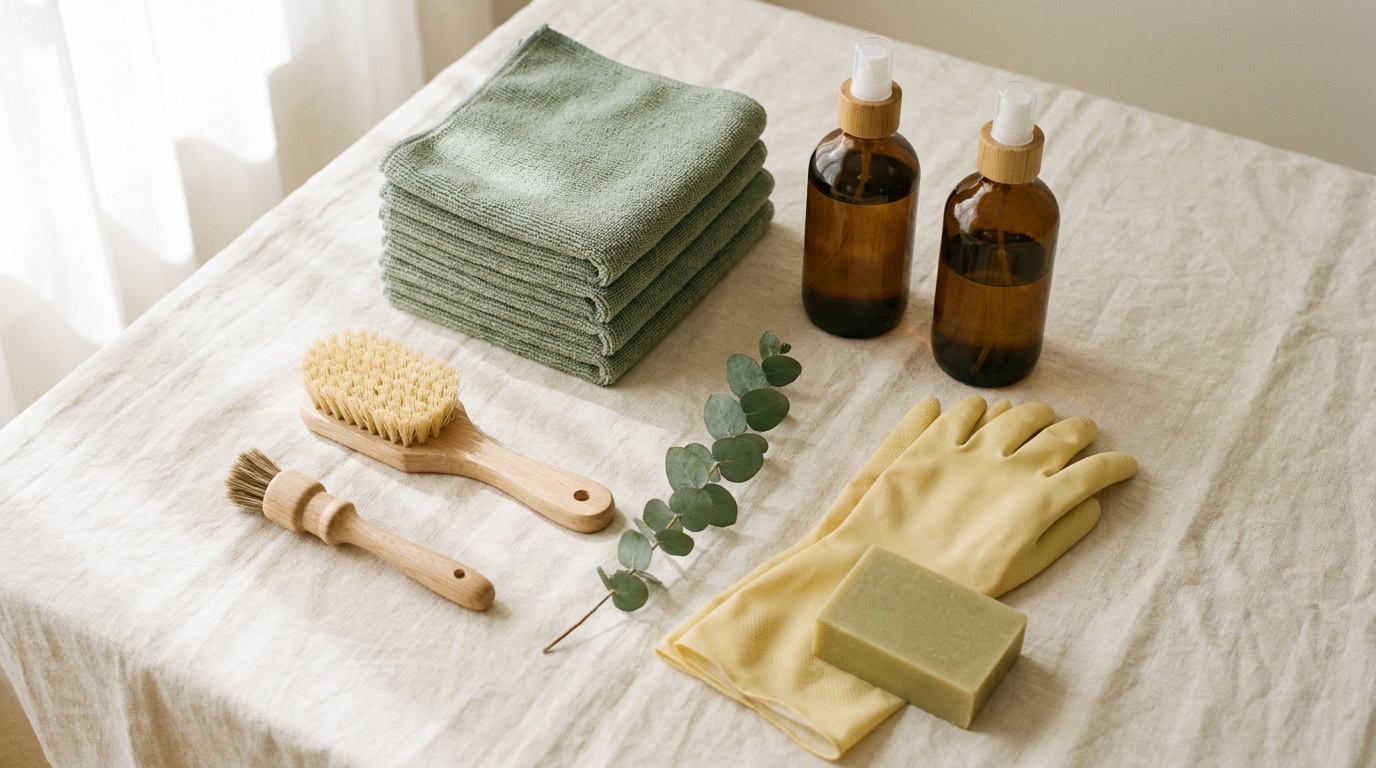
Dust with a damp or microfiber cloth
A dry cloth or feather duster scatters dust into the air, where it stays airborne for hours before resettling. A slightly damp cloth or a microfiber one traps the particles instead. Work top to bottom so anything you dislodge lands on a surface you haven't cleaned yet, and finish with the floor.
Vacuum with a HEPA filter, once or twice a week
A standard vacuum can blow fine allergens right through the bag and back into the room. A vacuum with a true HEPA filter captures them instead. Slow, overlapping passes over carpets and rugs pull far more out than a quick once-over — this is where most of the settled pollen and dander lives.
Wash bedding weekly in hot water
You spend a third of your life in bed, breathing right at the surface that collects dust mites and dander. Washing sheets, pillowcases, and blankets weekly in hot water knocks those numbers down. During ragweed season it also clears out any pollen that has drifted onto the bed.
Manage the entryway
Most of the pollen in your home walked in the front door. A good doormat, a no-shoes-inside habit, and wiping down pets after they've been out all cut the amount that ever reaches your living space. Keeping windows closed on high-pollen days — check a local Indianapolis pollen forecast in the morning — keeps the wind from doing the tracking for you.
Control humidity and mold
Dust mites and mold both need moisture. Keeping indoor humidity in check (a dehumidifier in the basement helps), running bathroom fans, and wiping down damp spots keeps both from taking hold. Change your HVAC filter on schedule, too — a fresh filter is quietly doing allergy work every time the system runs.
If a cleaning method puts dust into the air, it's working against you. Damp over dry, HEPA over standard, hot water over cold, and out-of-the-house over pushed-around-the-house.
Don't forget the reservoirs
Weekly surface cleaning handles the allergens in play, but a lot of them collect in spots that rarely get touched — the reservoirs that quietly refill the air. During allergy season, it's worth getting to:
- Baseboards and trim — dust and pollen settle here and get kicked up by foot traffic.
- Ceiling fans and light fixtures — then spread everything downward the moment you switch them on.
- Vents and returns — coated in dust that blows straight into the room.
- Upholstery and curtains — fabric holds pollen and dander; curtains especially, since they frame the windows pollen blows through.
- Under and behind furniture — where dust and dander pile up untouched for months.
These are exactly the areas a standard weekly tidy skips and a deep clean targets. If it's been a while, a single reset that hits all of them makes the weekly maintenance far more effective — our guide to deep clean vs. standard clean breaks down what each one covers.
Breathe easier this ragweed season
Tell us about your home and we'll put together a cleaning plan that targets the pollen, dust, and dander behind your symptoms — with a HEPA-filtered, top-to-bottom approach.
Get My QuoteHow often to clean during the season
Allergen buildup is a losing race if you clean too rarely — pollen and dander re-accumulate fast, especially with pets or open windows. As a baseline through ragweed season, aim to dust and vacuum once or twice a week and wash bedding weekly. Households with pets, kids, or someone who reacts strongly often go to the higher end of that range for the fall stretch, then ease back once the first frost clears the air.
If you already have recurring service, this is the time of year many people temporarily bump up a level — monthly to biweekly, or biweekly to weekly — for August through October. Our frequency guide walks through how to match a cadence to your household, and it's easy to adjust the schedule as the season turns.
Where a professional clean earns its keep
You can absolutely do a lot of this yourself. Where a professional clean pulls ahead during allergy season is the combination of the right tools and the reservoirs — HEPA-filtered vacuums, a methodical top-to-bottom pass, and consistent attention to the baseboards, vents, upholstery, and under-furniture spots that quietly re-seed your air. It also takes the physical work off the person who's reacting to the allergens in the first place, so nobody's stuck stirring up ragweed with a duster on their worst symptom day.
Whether you handle it yourself or bring us in, the principle is the same: during ragweed season, treat your home as the front line. Pull the allergens out consistently, hit the spots that hold them, and the hours you spend indoors get a whole lot easier to breathe through.
FAQ
Does cleaning my house actually help with allergies?
It helps by lowering the allergen load inside your home. Pollen tracked in on shoes, clothes, and pets, along with dust mites, pet dander, and mold, are the triggers you're exposed to indoors — where you spend most of your time. Regular, thorough cleaning reduces how much of that you breathe in. It won't cure an allergy or replace treatment from your doctor, but for many people it makes symptoms noticeably easier to live with.
When is allergy season worst in Indianapolis?
Central Indiana gets tree pollen in spring, grass pollen in early summer, and ragweed and other weed pollen from roughly mid-August through the first hard frost — often into late October. Ragweed is the big one for fall: a single plant can release around a billion pollen grains in a season, and counts usually peak in September. That late-summer-into-fall stretch is the toughest for most allergy sufferers here.
How often should I clean during allergy season?
During ragweed season, aim to dust and vacuum once or twice a week with a HEPA-filter vacuum, and wash bedding weekly in hot water. Many allergy-prone households bump their professional cleaning up a level — from monthly to biweekly, or biweekly to weekly — for the fall stretch, then ease back off once the first frost knocks the pollen down.
What's the best way to clean to reduce allergens?
Use a damp or microfiber cloth so dust is trapped instead of scattered into the air, vacuum with a HEPA filter, keep windows closed on high-pollen days, and control indoor humidity to limit dust mites and mold. Don't skip the reservoirs where allergens collect — baseboards, vents, ceiling fans, upholstery, curtains, and under furniture.